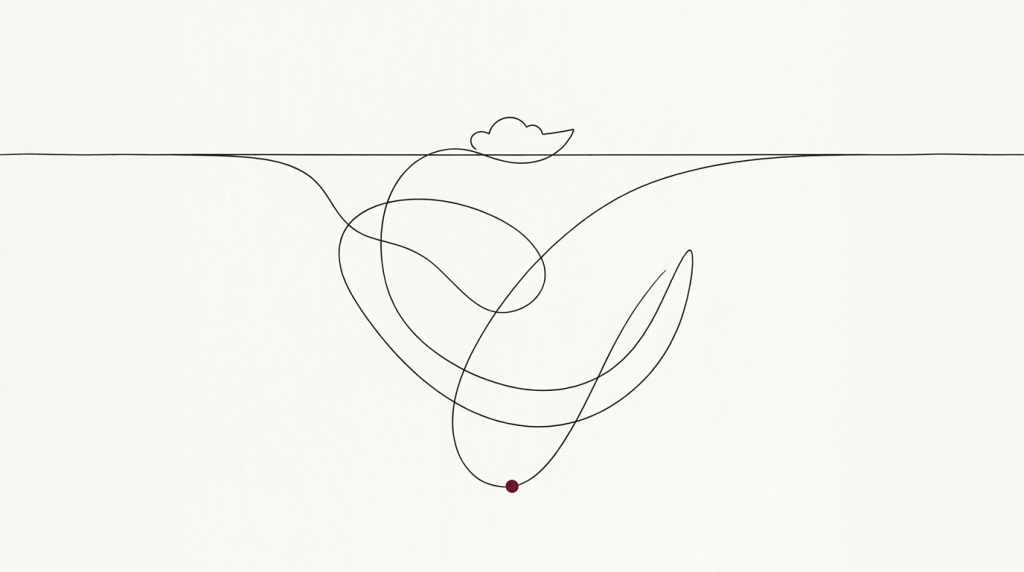
The word “psychoanalysis” tends to conjure a familiar set of images — a couch, dream interpretation, a silent analyst sitting behind the client. Some of that is genuinely tied to the method’s history, but the actual practice today looks quite different, and far more grounded, than the cultural stereotype.
The idea behind it
The central idea of psychoanalysis is that much of what shapes our feelings, decisions and recurring difficulties lies outside conscious control — not because we’re “not trying hard enough” to understand it, but because part of our mental life is structured in a way that isn’t directly accessible to reflection. This is what’s commonly called the unconscious.
From this comes a practical goal: to make what was previously hidden more accessible — not for the sake of abstract self-knowledge, but so a person gains more freedom in how they respond, rather than simply repeating familiar, often unsatisfying patterns.
What it looks like in practice
Contemporary psychoanalytic work is, above all, a regular conversation. A person talks about what’s troubling them, about dreams, memories, reactions to specific situations — and the specialist listens not only to the content, but to how it’s organized: what repeats, what gets avoided, which topics provoke resistance.
An important part of the work is what happens within the relationship between client and specialist itself. How a person builds that relationship — trusting, testing, keeping distance — often reflects broader patterns at play in other relationships in their life. This isn’t abstract theory; it’s working material that can be discussed and explored directly in session.
How it’s different from “just talking to a friend”
The difference lies in structure, regularity, and the listener’s position. A friend is likely to give advice, share the emotion, take your side — and that’s valuable, but it doesn’t replace professional work. A specialist trained in psychoanalysis holds a more neutral position, doesn’t bring their own interests into the relationship, and draws on a theoretical framework that helps them see patterns behind individual episodes.
Beyond that, a psychoanalyst goes through extensive personal analysis and supervision themselves — a professional requirement, not an optional extra, and one that directly affects the quality of their work with clients.
Who this approach suits
Psychoanalysis isn’t the only method, and it isn’t universal — that’s normal, since different people and different requests suit different approaches. Psychoanalytic work is especially useful when:
- a difficulty keeps repeating across different areas of life, regardless of changing circumstances;
- there’s a sense of “I understand it intellectually, but can’t seem to act differently”;
- you’re interested not only in an immediate result, but in a deeper understanding of yourself.